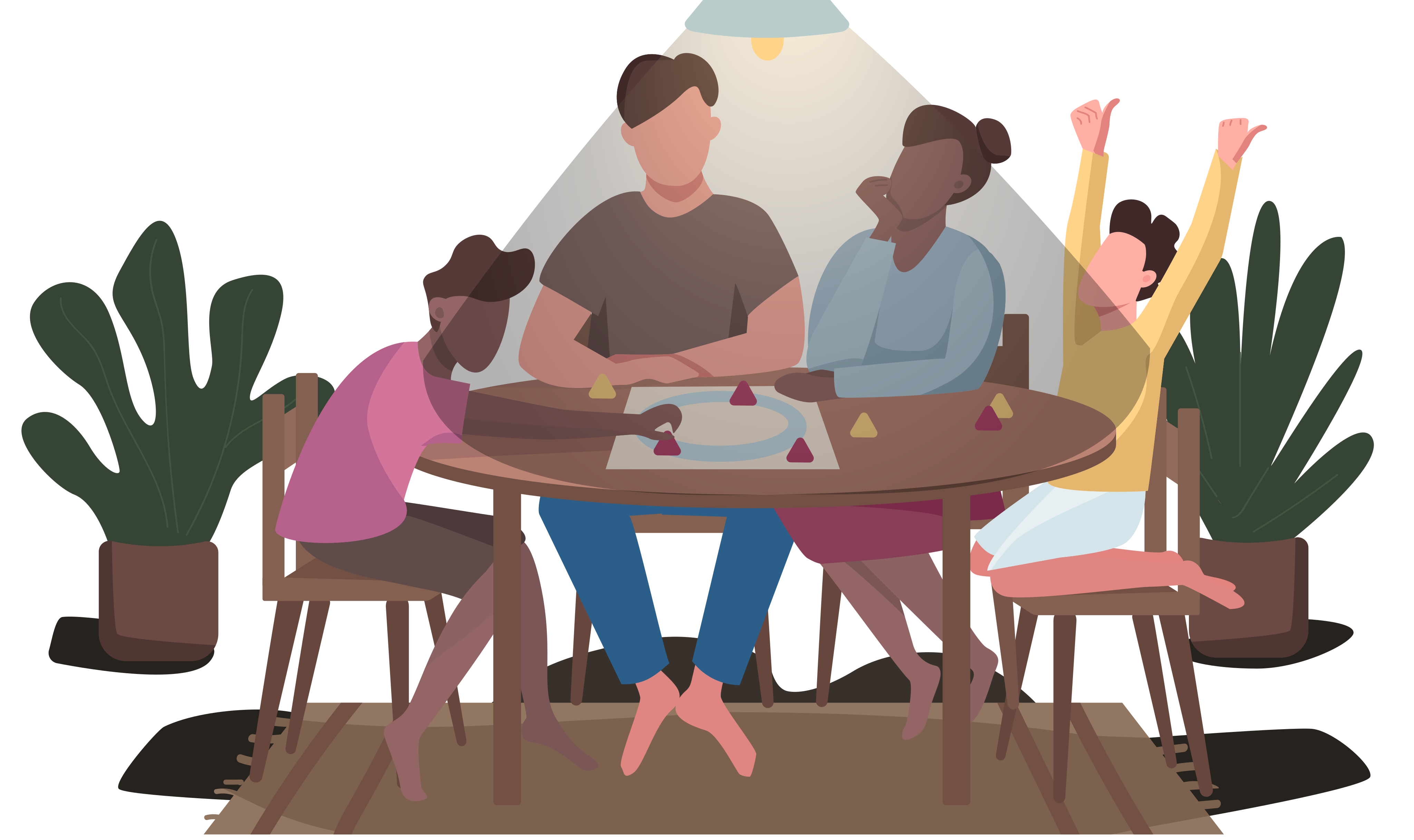
Start with a familiar game
Choose a game your group already knows.
When everyone understands the rules, it’s easier to pay attention to the achievement itself. A game you’ve played ten times is usually a better choice than one you’ve just unwrapped.
Not every achievement is played the same way
Some achievements are meant to be chased.
You’ll read them before the game starts and keep them in mind while you play.
Others are discovered afterwards.
You finish a game, browse the achievement list, and realize you completed one without even trying.
Both approaches are part of LudoLog.
| Chasing an achievement | Discovering an achievement |
|---|---|
| Read it before the game | Notice it afterwards |
| Influences your decisions | Happens naturally during play |
| Usually requires planning | Often comes as a surprise |
Start with one
For your first game, choose a single Bronze or Silver achievement that sounds interesting.
It gives you something to look out for without turning the session into a checklist.
You can still earn other achievements during the same game if you meet their requirements.
Play as usual
Achievements don’t replace the game’s objectives.
You’re still trying to win, score points, build your engine, survive the outbreak, or complete whatever the game asks you to do.
The achievement is simply another thing happening alongside the game.
Sometimes you’ll actively pursue it.
Sometimes you’ll earn it without noticing.
Check what you earned
At some point during or after the game, you’ll be able to verify whether an achievement was completed.
If you earned one, mark it as earned.
If not, there will be another game.
What’s next?
Once you’ve earned a few achievements, you can:
- Try more difficult challenges
- Explore community-created achievements
- Follow a game’s progression path
- Create achievements of your own
But for now, one game and one challenge is enough.